Summary
The Spirit poured out, and the gospel carried from Jerusalem to Rome.
by Dr. David Silver5 min read
Read the Summaryby Dr. David Silver5 min read
Acts is part two of Luke’s account to Theophilus of what Jesus continued to do and teach (1:1). Acts 1:8 is the theme and outline of the book. The book was written around 61 A.D. since it ends with Paul imprisoned in Rome. The ministry of Peter is prominent in the first twelve chapters, and the ministry of Paul dominates the rest of the book. The ministry of Jesus is the major theme of the gospels, but the ministry of the Holy Spirit is prominent in Acts. The gospel goes out first to the Jews, but over time the Gentiles become recipients of it.
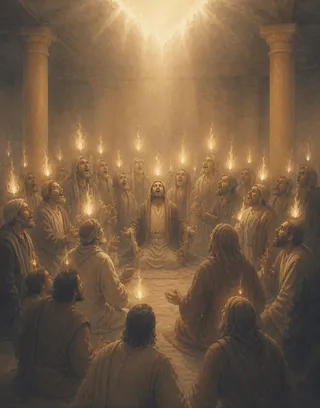
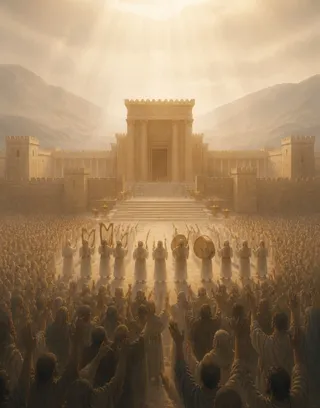
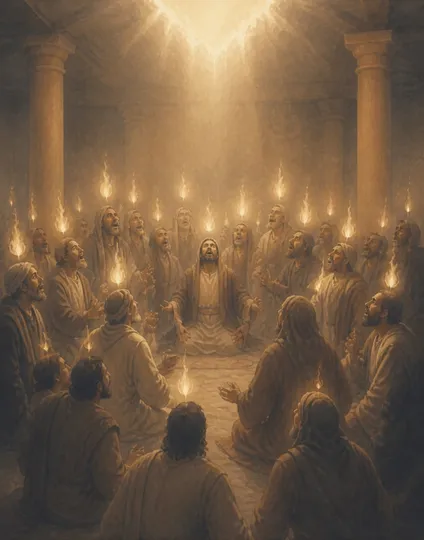
In Jerusalem, after Jesus’ ascension and Matthias replaced Judas as an apostle in chapter 1, Pentecost occurs in chapter 2. The Holy Spirit came down on the believers, and they spoke in various tongues to the surrounding multicultural audience. Peter preached the gospel and three thousand were added to their number. All the believers were together and had everything in common (2:44). Peter healed a crippled beggar at the temple and preached again, bringing the church to about five thousand men (4:4). After threats from the Sanhedrin (the Jewish leadership), the church prayed and they were all filled with the Holy Spirit and spoke the word of God boldly (4:31). After Ananias and Sapphira lied to the Holy Spirit about the amount of money a property sold for, they both suddenly died before Peter (5:1-11). Then many were healed by the apostles, which stirred up the jealousy of the Sanhedrin. They arrested the apostles again, but during the night an angel brought them out of jail. They were brought before the Sanhedrin and flogged. They continued preaching (5:42). In chapter 6, deacons were chosen. Among them was Stephen, a man full of God’s grace and power (6:8), who did great wonders and miracles. Opposition arose and Stephen was brought before the Sanhedrin. After a good Israel history lesson, and a convicting message, Stephen called the religious leaders stiff-necked and resistant to the Holy Spirit. They stoned him to death (7:54-8:1). Saul was there giving his approval.
The gospel spread to Judea and Samaria in chapters 8-12 after a persecution broke out against the church. But Saul began to destroy the church (8:3). Philip went to Samaria and preached the gospel, healed, and cast out demons. Peter and John went there and placed their hands on the believers, who received the Holy Spirit (8:17). This happened in all the locations mentioned in the theme verse (there were four ‘Pentecosts’ in the book). Philip later met an Ethiopian on the road to Gaza. The man was reading from the book of Isaiah. The Holy Spirit told Philip to go near the chariot. The man called him up with him and Philip explained the gospel starting with Isaiah 53. The man believed and was baptized. Meanwhile, Saul continued to persecute the church. He was on the way to Damascus to arrest believers when Jesus appeared to him with a blinding light. Paul could not see and was fasting and praying when Ananias came to him and healed his vision. Paul got up, was baptized and ate. He immediately started preaching the gospel in Damascus, proving from the Scriptures that Jesus was the Messiah.
Peter traveled about and went to visit the church in Lydda. There he healed a paralytic named Aeneas. When a believer named Dorcas died in Joppa, they sent for Peter. He raised her from the dead. Then a centurion named Cornelius sent for Peter after an angel appeared to him. Peter had a vision which showed him not to be biased, but to be willing to go to the home of a Gentile. When Peter shared the gospel in the home of Cornelius, all who heard the message received the Holy Spirit (10:44). Peter had to explain his actions to the church in Jerusalem, and they concluded that even the Gentiles were granted repentance unto life (11:18). Peter got arrested again, but an angel delivered him out of prison.
Paul (previously Saul) was the apostle to take the gospel to the ends of the earth. He went on three missionary journeys. He and Barnabas were sent on their way by the Holy Spirit (13:4). They went from Cyprus to Paphos, Pisidian Antioch, Iconium, Lystra and Derbe. They preached, rebuked false prophets, healed, and endured opposition. Paul was stoned in Lystra but got up and went back into the city. They returned to Antioch, their homebase, and reported all that God had done through them. They stayed there a long time teaching the disciples.
The council in Jerusalem, in chapter 15 (the middle of the book), met to deal with the Judaizing issue. Peter, Paul, and James agreed that the Gentiles did not need to be circumcised, or carry out Jewish customs, to become Christians. A letter was sent out to the Gentile believers in Antioch (15:23-29).
Paul took Silas and went on the second missionary journey (15:40). They returned to some of the cities they had visited, and Timothy joined them. The Spirit led them to go to Philippi, where they found a place of prayer, and Lydia believed the message. Paul and Silas ended up in prison and were severely flogged there after they cast a demon out of a slave girl who was predicting the future. While they prayed and praised God, an earthquake occurred and the jailer and his family came to the Lord. Then they traveled through Thessalonica, Berea, and Athens. Paul contextualized the gospel in Athens by preaching to them what they worshipped as unknown (17: 23). Lastly, in Corinth Paul stayed a year and a half teaching them the word of God (18:11).
In the third missionary journey, Paul spent two years of daily discussions in the lecture hall of Tyrannus in Ephesus. All the Jews and Greeks who lived in the province of Asia heard the word of the Lord (19: 10). He said goodbye to the Ephesian elders before going on to Jerusalem.
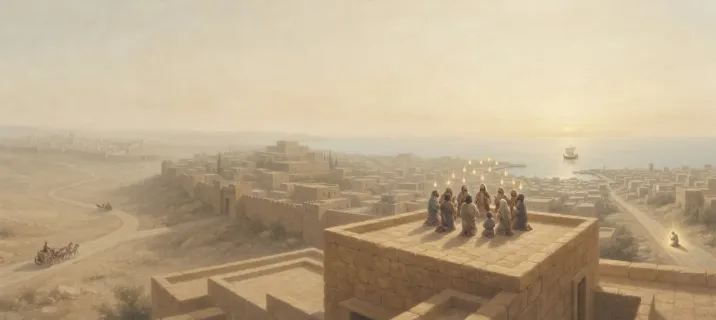
In chapters 21-28, Paul was on his way to Rome, though he was arrested in the temple in Jerusalem and had to wait in prison while he underwent trials with Felix, Festus, and King Agrippa. On the way to Italy, he endured a shipwreck, was bitten by a snake, and finally ended up in a house in Rome with a soldier guarding him. Boldly and without hindrance he preached the kingdom of God and taught about the Lord Jesus Christ (28:31).
Structure
Chapters 1–7
The ascension, Pentecost and three thousand added, a healing at the temple gate, the first opposition, the choosing of deacons, and Stephen stoned while Saul looks on.
Chapters 8–12
Persecution scatters the church, Philip and the Ethiopian, Saul struck down on the Damascus road, Peter sent to the house of Cornelius, and the gospel reaching Gentiles.
Chapters 13–20
Paul’s three journeys through Cyprus, Galatia, Philippi, Thessalonica, Athens, Corinth and Ephesus, and the Jerusalem council settling that Gentiles need not become Jews.
Chapters 21–28
Arrest in the temple, trials before Felix, Festus and Agrippa, a shipwreck on Malta, and Paul under guard in Rome, preaching boldly and without hindrance.
Key Themes
01
The real leading character; the church does nothing He does not start.
02
You will be my witnesses — the outline of the book is in one verse.
03
A word the church prays for and keeps receiving.
04
Prison, flogging, stoning and shipwreck never stop the word spreading.
05
Samaritans, an Ethiopian, a Roman centurion, Greek philosophers — the gospel goes everywhere.
The Challenge We Face
Luke opens by saying his first book was about all that Jesus began to do and teach, which makes this one the account of what He continued to do, by His Spirit, through His church.
Every sermon in Acts is about Him: crucified, raised, exalted, and the only name under heaven by which we must be saved.
Apply Scripture
The church’s power is the Holy Spirit, not its organisation.
Opposition has repeatedly spread the gospel rather than stopping it.
God changes the people least likely to come; Saul is the proof.
The gospel keeps crossing the boundaries we are comfortable with.
Pray for boldness; it is a prayer God answers.

Study guides
You've seen the big picture. Now explore the book verse by verse with our practical Bible Study Guide.
Related Resources