Summary
God's deliverance, covenant, and the journey to freedom.
by Dr. David Silver2 min read
Read the Summaryby Dr. David Silver2 min read
Exodus is the second book of the bible, written by Moses, highlighting God’s deliverance of Israel out of Egypt, the giving of the law at Mt. Sinai, and the building of the Tabernacle. When Jacobs family, seventy in all, came to live in Egypt at Joseph’s invitation, they were able to survive the famine. All that generation died, and a Pharoah who did not know about Joseph came to power. He was concerned the Israelites were too numerous, so he enslaved them. Four hundred years have gone by when the Exodus story begins.
An edict is made to kill male Israelite babies when they’re born by throwing them into the Nile River. Moses is born, put in a basket in the Nile, and is rescued ironically by Pharoah’s daughter. He grows up knowing he is a Hebrew, but he is also a prince of Egypt. After killing an Egyptian who was beating a Hebrew, he fled into the desert and settled down to have a family.
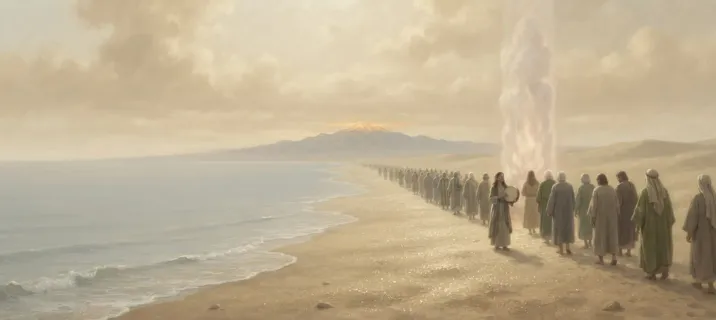
Forty years later, God appeared to Moses in a burning bush and called him to return to Egypt to deliver his people. God revealed Himself as Yahweh, the God of Abraham, Isaac and Jacob. Moses, with his brother Aaron’s help, go to Pharoah and ask him to ‘Let my people go’ (Exodus 5:1). God brings ten plaques on Egypt, ending with the Passover and the death of Egypt’s firstborns. Finally, Pharoah allows Israel to leave Egypt (this event, called the Exodus, is the central redemption event in the OT). Pharoah decides to pursue Israel in the desert with his army, and after Israel crosses the Red Sea on dry land, the Egyptian army is wiped out as the water covers them. In chapter 15 Moses writes a song that Israel sings to praise the Lord for his victory over their oppressors.
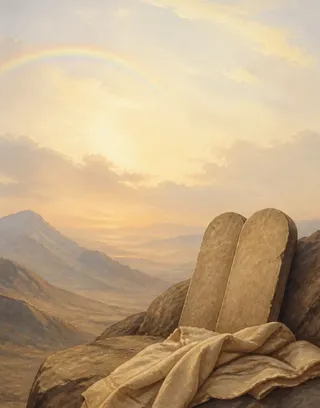
Despite the Israelites grumbling in the desert, God provides food, water and victory in battle against the Amalekites. God leads Israel to Mt. Sinai where he makes a covenant with them and gives them His law known as the Ten Commandments (chapter 20). God gives them fifty-two other laws to help govern Israel and prepares them to build the Tabernacle (a tent where God’s presence dwelled).
Unfortunately, before Moses came down from the mountain with the law, the Israelites were already breaking it by making a golden calf (chapter 32). Moses went up the mountain a second time to get the Ten Commandments again (he had broken the first set). God revealed his character to Moses in Exodus 34: 6-7.
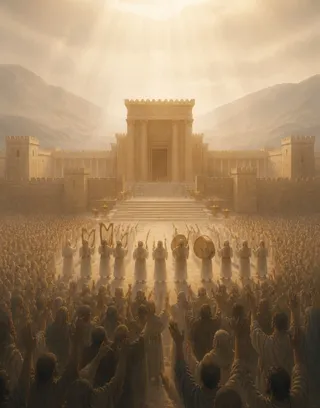
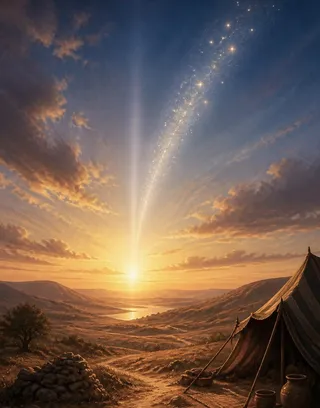
In chapters 35-40, the Israelites build the Tabernacle. God’s glory filled it so even Moses could not enter it. God’s presence was restored to them in the Tabernacle (a type of the Garden of Eden). Since Israel tended toward disobedience, they needed to learn how to approach this Holy God. That leads us to the following book of Leviticus.
Structure
Chapters 1–12
Israel is enslaved in Egypt, Moses is called from the burning bush, and ten plagues end in the Passover and the release of God’s people.
Chapters 13–18
Israel crosses the Red Sea and sings of the Lord’s victory, then grumbles in the desert while God provides food, water, and protection.
Chapters 19–24
God meets Israel at the mountain, gives the Ten Commandments and the laws that govern the nation, and seals the covenant.
Chapters 25–40
Israel breaks the covenant with the golden calf and is forgiven, then builds the tent where God’s glory comes to dwell among them.
Key Themes
01
The exodus from Egypt is the central act of rescue in the Old Testament.
02
God reveals Himself as Yahweh, the God of Abraham, Isaac, and Jacob.
03
God binds Himself to a people and gives them His law to live by.
04
God does not rescue His people and leave; He comes to dwell with them.
05
God reveals Himself as compassionate and gracious even after the golden calf.
The Challenge We Face
The Passover lamb whose blood turns away judgment is the clearest picture in the Old Testament of the cross, and the New Testament calls Christ our Passover.
Moses the deliverer, the law written in stone, and the tabernacle where God’s glory dwells all point forward to the one who would deliver His people from a deeper slavery and make His dwelling among us.
Apply Scripture
God hears His people and acts, even after four hundred years of silence.
Rescue comes before the law; obedience is a response to grace, not a price for it.
God calls ordinary and reluctant people into His work.
Grumbling forgets what God has already done.
God forgives covenant-breakers and stays with them.
Study guides
You've seen the big picture. Now explore the book verse by verse with our practical Bible Study Guide.
Related Resources