Summary
Christ is better: a greater priest, a better covenant, a finished sacrifice.
by Dr. David Silver3 min read
Read the Summaryby Dr. David Silver3 min read
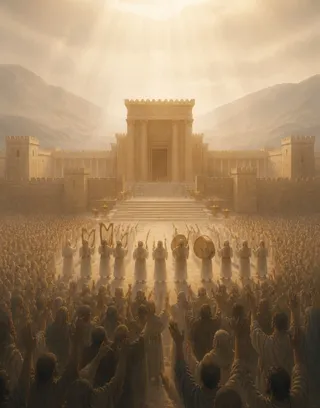
Hebrews is an epistle in the NT without a known author. The date it was written is not known either, though it seems to have been written before the temple in Jerusalem was destroyed in 70 A.D. The original recipients were Jewish Christians who were being persecuted and were considering going back to their old way of life in Judaism. It can be divided into two sections: 1:1- 10:18 dealing with doctrinal issues; 10:19-13:25 dealing with practical living. It is written as a sermon full of warnings and highlights the supremacy of Christ over angels, Moses, Melchizedek, and the OT law system. Jesus is our high priest (chapters 3-10), and Christians are desert wanderers in need of help from him. It also emphasizes the absolute necessity to persevere in the Christian faith.
Chapter 1 shows beyond a doubt that Jesus is fully God, while chapter 2 emphasizes that he was fully man. In chapter 1, Jesus the Son is heir of all things and creation was made through him (1:2). The next verse is perhaps the most convincing verse in the NT regarding the deity of Christ. After providing purification for sins, he sat down at the right hand of the Father. He became superior to angels (1:3-4). The angels are to worship him (1:6). About the Son he says, ‘Your throne, O God, will last forever and ever.’ ‘Therefore God, your God, has set you above your companions. (1:9)’ In chapter 2, we see Jesus was made a little lower than the angels (2:9). Jesus calls men his brothers (2:11). He shared in their humanity (2:14). He was made like his brothers in every way (2:17).
Jesus, as a high priest, was found worthy of greater honor than Moses (3:3). The believers were warned not to turn away from such a great salvation in Christ (3:12-15). Those with faith enter the rest of God (4:3). They are to make every effort to enter that rest (4:11). Believers have a high priest who is sympathetic with their weaknesses, and they can approach the throne of grace to receive mercy and find grace to help in time of need (4:15-16). The author warns the readers to avoid falling away, but rather they should mature in their faith (5:11-6:6).
Jesus is declared a priest forever, in the order of Melchizedek (7:17,21). Jesus has become the guarantee of a better covenant (7:22). Jesus lives forever and has a permanent priesthood (7:24). Jesus has a superior ministry to earthly priests since he serves in the true tabernacle set up by the Lord in heaven (8:1-2,6). Worship in the earthly tabernacle was temporary until the new order came (9:10). Christ, as high priest, went through the greater tabernacle, once by his own blood, having obtained eternal redemption (9:12). Believers have been made holy through the sacrifice of Christ’s body once and for all (10:10).
Because of this work of Christ, the author encouraged believers to draw near to God, hold unswervingly to the hope they profess, and not to give up meeting together (10:22-25). The believers are strongly exhorted to persevere despite persecution (10:33-36). In chapter 11, the author lists OT examples of faith, and remarks that without faith it is impossible to please God (11:6). All these heroes of the faith were still living by faith when they died (11:13).
The believers are to run with perseverance the race marked out. They are to fix their eyes on Jesus (12:2). They are to consider Christ in their trials, so they don’t grow weary and lose heart (12:3). The author exhorts the believers to endure hardship as discipline, which produces a harvest of righteousness and healing (12:7-12). Once again, the author warned the believers not to refuse God who speaks from heaven (12:25).
Lastly, the author warns his readers not to be carried away by strange teachings, but rather to be strengthened by grace (13:9). Believers are to continually offer to God a sacrifice of praise, to do good, and to share with others (13:15-16). In the benediction, the request is for the God of peace to equip God’s people with everything good for doing his will (13:20-21).
Structure
Chapters 1–2
God has spoken by His Son, the radiance of His glory — fully God, and made fully man so that He could taste death for everyone.
Chapters 3–4
Worthy of greater honour than Moses, and offering a rest His people are urged to make every effort to enter.
Chapters 5–7
A high priest in the order of Melchizedek — not by ancestry but by the power of an indestructible life, who lives forever to intercede.
Chapters 8–10
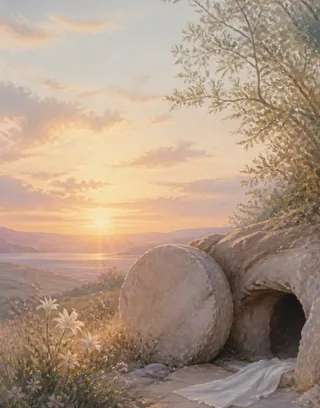
The earthly tabernacle a copy of the true one; Christ entered once for all by His own blood and sat down, because the work was finished.
Chapters 11–13
The roll call of faith, the race to be run with eyes fixed on Jesus, discipline as a father’s love, and final instructions for ordinary church life.
Key Themes
01
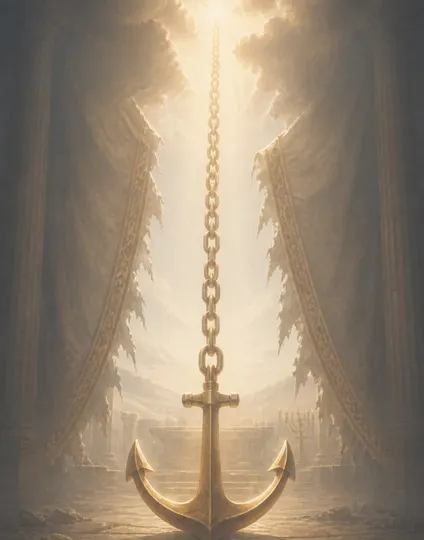
The word of the whole book: a better hope, covenant, promises, sacrifice, country.
02
A high priest who sympathises with our weaknesses and has been tempted as we are.
03
Five sharp warnings against drifting, hardening, and falling away.
04
Being sure of what we hope for and certain of what we do not see.
05
Do not throw away your confidence; it will be richly rewarded.
The Challenge We Face
Hebrews is about Christ from the first sentence to the last. He is the exact representation of God’s being, the one who provided purification for sins and sat down at the right hand of the Majesty in heaven.
Everything in the old order — priest, tabernacle, sacrifice, covenant, Sabbath rest — is read as a shadow of Him. Which is the argument of the book: having Him, there is nothing to go back to.
Apply Scripture
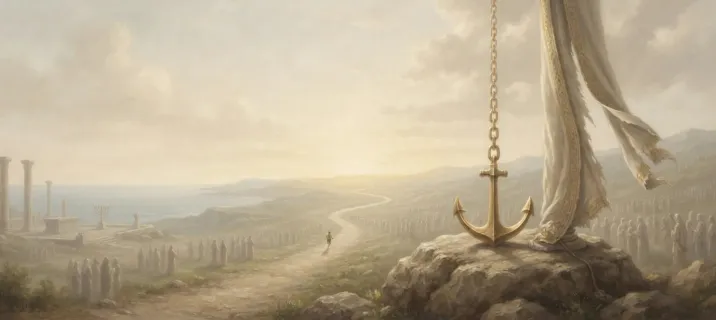
Jesus understands weakness from the inside; come to Him for help.
His sacrifice was once for all; nothing needs adding to it.
Faith is acting on what God has said before you can see it.
Hardship can be God’s training rather than His absence.
Fix your eyes on Jesus and keep running.

Study guides
You've seen the big picture. Now explore the book verse by verse with our practical Bible Study Guide.
Related Resources