Summary
Judgment and comfort, and the Servant who bears the sin of many.
by Dr. David Silver4 min read
Read the Summaryby Dr. David Silver4 min read
Isaiah contains sixty-six chapters (called a ‘mini-Bible’ since the Bible has sixty-six books). Isaiah is considered a major prophet due to the length of the book. Isaiah lived during the reigns of four kings in Judah (Uzziah, Jotham, Ahaz, and Hezekiah). The book can be divided into three sections which span three historical settings: chapters 1-39 cover 739 B.C. to 701 B.C.; chapters 40-55 cover 605 B.C. to 539 B.C.; chapters 56-66 cover 539 B.C. to 500 B.C. These periods correspond to Israel being conquered by Assyria (722 B.C.), the Babylonian Exile (586 B.C.) and the return from exile. The first thirty-nine chapters deal more with judgment, and chapters 40-66 portray more blessing. Since Isaiah focuses on Messianic prophecies, it is quoted or alluded to more than any other OT book. Just as the text in the book of Revelation flows from the heavenly scene in chapters 4-5, so in Isaiah the book flows out of the heavenly throne room scene and Isaiah’s calling in chapter 6. Isaiah (his name means salvation of the Lord), the main author of the book, began his ministry in 740 B.C.
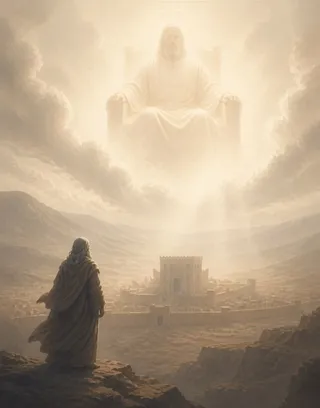
In the first five chapters, the emphasis is on Judah’s judgment. They will go into exile for lack of understanding (Isaiah 5: 13). This will not happen for one hundred and thirty-five years though. In the year that King Uzziah died, Isaiah had a heavenly vision of God on his throne (Isaiah 6: 1). The seraphs (celestial beings) cry out, “Holy, holy, holy is the Lord Almighty.” (Isaiah 6: 3) Isaiah, after admitting he was a man of unclean lips, got his lips scorched with a hot coal. Then he was commissioned by God to be a prophet to Israel.
In chapter 7, God spoke through Isaiah to King Ahaz (in Judah) regarding the opposing armies of Aram and Israel. Instead of trusting God, King Ahaz asked Assyria to help Judah and gave them tribute (2 Kings 16: 7-9). Isaiah shared with the king consequences for doing that and intertwined Messianic prophecies with the message in 7: 14; 9: 2-7; 11: 1-10.
In chapters 13-23, God reveals judgment on the nations and cities of Babylon, Assyria, Moab, Damascus, Cush, Egypt, Arabia, and Tyre. After prophesying about end times in chapters 24-27, he declares woes and blessings on Israel and Judah in chapters 28-35. From chapters 36-39, Isaiah reviews the historical event of Assyria threatening Jerusalem in 701 B.C. Isaiah worked with Hezekiah, who prayed to the Lord. The next day an angel of the Lord put to death one hundred eighty-five thousand men in the Assyrian camp (Isaiah 37: 36). Assyria broke camp and Jerusalem was saved. After this deliverance, Hezekiah had a life-threatening illness which God healed after Hezekiah cried out in prayer. Envoys from Babylon came to comfort him after this experience and he showed them everything in his palace. God warned Hezekiah that in the future Babylon would come and carry everything off to Babylon (Isaiah 39: 6).
John the Baptist’s key verse, which he quoted, is found in Isaiah 40: 3, “A voice of one calling: In the desert prepare the way for the Lord.” This chapter also has many attributes of God expounded: glory (v.5); the word of our God stands forever (v.8); sovereign, power (v.10); shepherd, gentle (v.11); over creation (vv. 12, 26, 28); holy (v.25); everlasting (v. 28); unfathomable understanding (v. 28).
In chapters 40-48 God brings deliverance for his people. Chapters 49-57 feature salvation through the Servant. The closing chapters (58-66) show God’s restoration of Israel and the world. Servanthood is also a major theme in chapters 40-66. Motive for servanthood is shown in chapters 40-48, means of servanthood in chapters 49-55, and marks of servanthood in chapters 56-66. We find the Messiah is the suffering servant, especially in chapter 53. Jesus fulfills this prophecy by his death and resurrection.
While Israel and humans in general have an inability to serve in holiness and justice, God has and gives the ability to his people through the work of this suffering servant. “Come, all you who are thirsty, come to the waters; and you who have no money, come, buy and eat! Come, buy wine and milk without money and without cost.” (Isaiah 55: 1) Those who repent and are contrite, God loves to revive. When Jesus read in his home synagogue, he turned to Isaiah 61: 1: “The Spirit of the Sovereign Lord is on me, because the Lord anointed me to preach good news to the poor.” So, Isaiah’s prophecies were fulfilled over seven hundred years after he made them.
Structure
Chapters 1–12
Indictment of a nation that will not understand, the throne-room vision and Isaiah’s calling, and the first Messianic promises — a virgin’s son, a child born to us, a shoot from the stump of Jesse.
Chapters 13–35
Oracles against Babylon, Assyria, Moab, Egypt, Tyre and the rest, apocalyptic chapters on the last days, and woes and blessings for Israel and Judah.
Chapters 36–39
Assyria at the gates, a king who prays, an angel in the night, a healing, and a warning that Babylon will take it all.
Chapters 40–55
Comfort my people, a voice crying in the wilderness, the incomparable God — and four Servant Songs ending in the one pierced for our transgressions.
Chapters 56–66
True fasting, the Spirit of the Lord upon the anointed one, and new heavens and a new earth.
Key Themes
01
Holy, holy, holy — the vision in chapter 6 shapes everything that follows.
02
The book turns at chapter 40 from sentence to consolation.
03
Four songs describe one who serves, suffers, and justifies many.
04
Ahaz turns to Assyria, Hezekiah turns to God — the two options the book keeps putting forward.
05
Isaiah’s own name means the salvation of the Lord, and the book is full of it.
The Challenge We Face
No Old Testament book is quoted more in the New. A virgin will conceive; a child is born and the government is on His shoulders; a voice cries in the wilderness to prepare the way.
Chapter 53 describes a Servant despised and rejected, pierced for our transgressions, silent before His accusers, numbered with the transgressors, and satisfied when He sees the result of His suffering. Jesus read Isaiah 61 in Nazareth and said that it was fulfilled that day.
Apply Scripture

A clear sight of God’s holiness changes how you see yourself.
Fear pushes us to make alliances instead of prayers.
God comforts His people without pretending the judgment did not happen.
The Servant suffers in the place of those who deserved it.
Wait on the Lord and your strength will be renewed.

Study guides
You've seen the big picture. Now explore the book verse by verse with our practical Bible Study Guide.
Related Resources