Summary
Written that you may believe that Jesus is the Christ, and have life in His name.
by Dr. David Silver3 min read
Read the Summaryby Dr. David Silver3 min read
John is an apostle of Jesus, and his book is one of four gospels discussing the life, death, and resurrection of Jesus. His gospel is unique compared to the other three synoptic gospels (Matthew, Mark, Luke), as 92% of his material is not in the others. He does not have parables, and he talks less about miracles. It was written about 90 A.D. His theme verse is towards the end of the book. The book can be divided into three parts: the prologue (1:1-18); the book of signs (1:19- chapter 12); the book of glory (chapters 13-21). The first half of the book displays more his public ministry and the last half his private ministry to the apostles.
In the prologue, John makes it clear that Jesus is God and man, the Christ, the Son of God, who has made the Father known (1: 1-2,14,18). He begins like Genesis 1 does: “In the beginning.” Jesus was the Word (logos) and was God (1:1-2). He was the creator (1:3,10). He became flesh and dwelled among us (1: 14). He came from the Father full of grace and truth (1: 14). God, the one and only, who is at the Father’s side, has made him known (1:18).
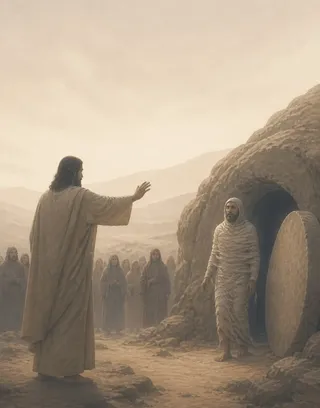
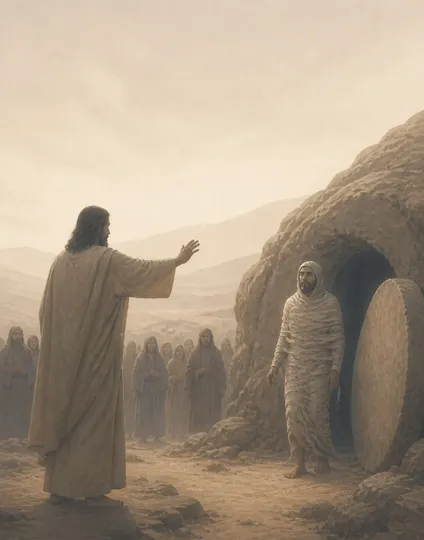
In the second section, John gives seven miracles that occur around the time of Jewish festivals and that are tied to Jewish rites. He also has seven ‘I am’ sayings further clarifying his identity. John the Baptist, the forerunner, points to Jesus as the lamb of God. Jesus chose his disciples. His first miracle is changing the water into wine at a wedding (2:1-11). He teaches Nicodemus what it means to be ‘born again’ (3:3-8). Then he reveals himself as Messiah to a Samaritan woman at a well (4:1-26). Many from Samaria came to him and believed that he was the Savior of the world (4:42). He healed the son of a royal official from Capernaum. Then later in Jerusalem, at a feast, he healed a man who had been an invalid for thirty-eight years. He fed the five thousand, walked on water, and called himself the bread of life (chapter 6). Opposition arose when he healed on the Sabbath. A man born blind whom Jesus healed was thrown out of the synagogue when he told the Jewish leaders he was a disciple of Jesus. Then Jesus raised his friend Lazarus from the dead (chapter 11).
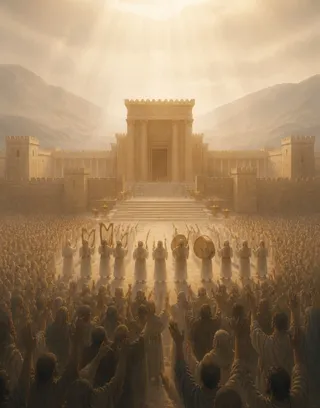
The last section focuses on Jesus final week in Jerusalem: the triumphal entry, the last supper, the upper room discourse; his arrest, death, resurrection, and epilogue. In the last supper, Jesus washed the disciples’ feet and predicts his betrayal and Peter’s denial. In the upper room discourse, he comforts his disciples with encouraging words to trust in him and God (14:1). When Thomas questions where Jesus is going, Jesus’ answer is classic. Jesus promises the Holy Spirit will come after he is gone and help the disciples and the people of God. Jesus describes himself as a vine (15:1). His people must abide in him to bear fruit. Apart from him we can do nothing (15:5). In chapter 17, the Lord’s prayer is for himself, his disciples, and those who will believe in the future. He wants his people to be one (17:11,20-22).
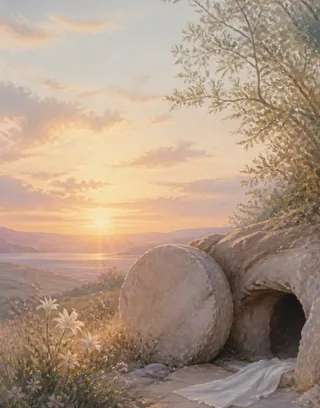
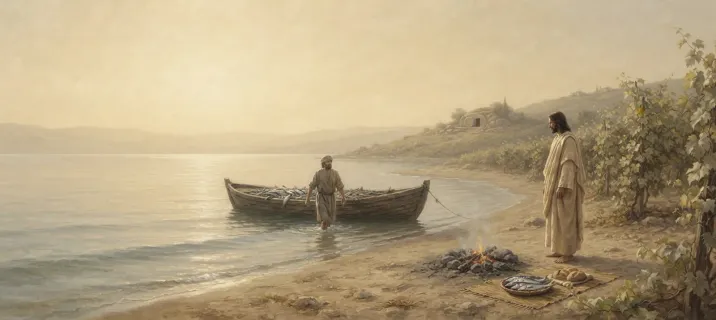
After his arrest, Jesus is sentenced to be crucified. He died and was buried in a tomb. He resurrected and appeared before Mary Magdalene near the tomb, and then to the disciples. Since Thomas was absent the first time, he appeared to the disciples again and challenged Thomas. Thomas believed and called Jesus his God. In the epilogue, the disciples went out fishing and caught nothing. Jesus called to them from the shore and told them to throw the net on the other side of the boat- they caught one hundred fifty-three fish. John recognized him (21:7). Jesus had breakfast waiting for them. He reinstated Peter three times after the three denials. Jesus predicted the type of death Peter would eventually face.
Structure
Chapter 1:1–18
In the beginning was the Word; He was God, He made all things, and He became flesh and dwelt among us, full of grace and truth.
Chapters 1:19–12
Seven miracles and seven “I am” sayings: water into wine, Nicodemus born again, the woman at the well, the bread of life, a man born blind, and Lazarus raised.
Chapters 13–17
Feet washed, a new commandment, the promise of the Spirit, the vine and the branches, and Jesus praying for His own and for those who would believe.
Chapters 18–21
The arrest, the trial before Pilate, the crucifixion, the empty tomb, Thomas convinced, and Peter reinstated over breakfast on the shore.
Key Themes
01
The verb appears nearly a hundred times; the whole book is written for it.
02
Eternal life is not only future here; it begins when you believe.
03
The light shines in the darkness, and the darkness has not overcome it.
04
Bread, light, door, shepherd, resurrection, way, vine — and the divine name behind them.
05
A new commandment: love one another as I have loved you.
The Challenge We Face
John does not build to the conclusion; he opens with it. The Word was with God, and the Word was God, and the Word became flesh.
Every sign and every “I am” is evidence for the same claim, and John says outright why he wrote: so that you may believe that Jesus is the Christ, the Son of God, and that by believing you may have life in His name.
Apply Scripture
Jesus is not a messenger from God; He is God made flesh.
Eternal life starts now, in knowing Him.
Abide in Him — apart from Him we can do nothing.
Honest doubt, like Thomas’s, is met rather than dismissed.
Failure is not the end; Peter was restored by the one he denied.
Study guides
You've seen the big picture. Now explore the book verse by verse with our practical Bible Study Guide.
Related Resources