Summary
A reluctant prophet and a God whose mercy reaches the people we'd rather avoid.
by Dr. David Silver4 min read
Read the Summaryby Dr. David Silver4 min read
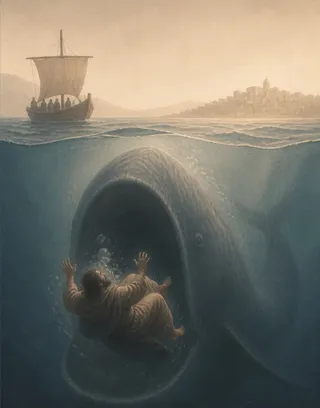
Jonah is a minor prophet whose book is one of ‘The Twelve.’ He lived in the first half of the eighth century B.C., during the reign of Jeroboam II. His prophecy in 2 Kings 14: 23-25 came true. Assyria was a world power at this time and a threat to Israel. Nineveh was its capital. In chapter 1, God calls Jonah to preach to Nineveh, but instead he goes the other direction to Tarshish. The Lord sent a great wind and a storm that threatened the ship Jonah was on. Jonah was thrown into the sea and swallowed by a great fish. He was inside the fish for three days, which became a sign that Jesus mentioned. In chapter 2, Jonah prays inside the fish and then is vomited onto dry land. In chapter 3, after God repeated his call, Jonah obeys and goes to Nineveh. He preached one sentence (forty more days and Nineveh will be destroyed) and all of Nineveh repented. God spared them. In chapter 4, Jonah speaks with God and God deals with Jonah’s anger. There is some prayer in every chapter.
In chapter 1, the fact that God is dealing with the wickedness of a foreign nation shows he is God of all the earth. He is sovereign, as many verses in this book indicate (1: 4, 17; 2: 3, 10; 3: 10; 4: 6, 8). Jonah ran away from the Lord and got on a ship heading for Tarshish (in the Bible, ships of Tarshish always have a bad connotation). Jonah had a fourfold declension (he went down to Joppa, he went down below deck, he was thrown overboard down into the sea, he sank down to Sheol). The pagan sailors that were with Jonah were afraid due to the severe storm God has sent and each cried out to his god (1: 5). Jonah went below deck and fell asleep. Jesus also fell asleep on a boat during a severe storm, except he stopped the storm by command; Jonah had to be thrown overboard to stop it.
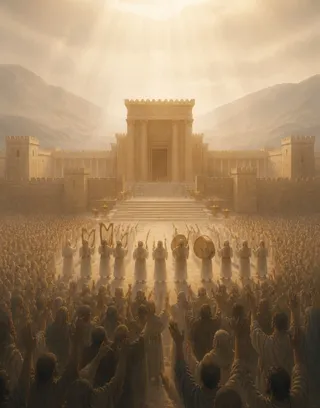
In chapter 2, Jonah prayed inside the fish. He recognized that God hurled him into the sea (2: 3). In accordance with Solomon’s prayer at the dedication of the temple, Jonah prayed towards Jerusalem. He also remembered several psalms that he quotes in his prayer (11, 18, 30, 31, 42, 69, 77, 116, 120). Jonah is thankful for salvation and realized that idolatry forfeits grace (2: 8-9).
In chapter 3, Jonah gets a second chance. This time he obeys, but we find out in the last chapter that he does it begrudgingly. He only goes one day into a city that took three days to journey across. He only preached one sentence, yet it led to the greatest revival in all of history. He is a miserable, successful prophet. The Ninevites believed God, fasted, called on God, and turned from their evil ways. Jeremiah 18: 7-10 discusses the idea of prophetic contingency and why the Lord relents at times when threatening disaster.
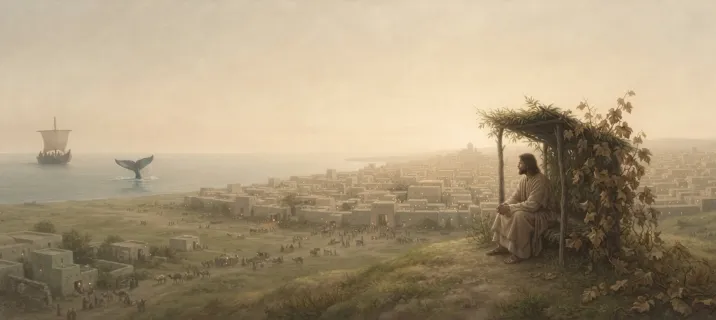
In chapter 4, we see Jonah’s anger. The sailors in chapter 1 repent, as do the Ninevites in chapter 3. The question is will Jonah, and by extension the Israelites, repent for all their waywardness? Jonah knew the most common verse in the OT and reiterates it to the Lord in 4: 2. Jonah would rather die than see his enemies forgiven. God questions his right to be angry in 4: 4, 9. Jonah also reminds us of Elijah, who also wanted to die when Jezebel threatened him. The Lord gave Jonah a metaphor by providing a vine to give Jonah comfort from the sun and then allowing a worm to kill it the next day. When Jonah told the Lord he was still angry enough to die, God questioned him and showed him the analogy: the vine grew up and died overnight, but Nineveh has one hundred and twenty thousand people and many cattle. Should not God be concerned with that great city (4: 11). Jonah was concerned about the fleeting vine, but God loves people-even Israel’s enemies. The book ends with this question so we can examine ourselves for selfishness and prejudice versus God’s love.
Structure
Chapter 1
Called to Nineveh, Jonah sails the opposite way; a storm, praying pagan sailors, a man asleep below deck, and the sea growing calm when he goes over the side.
Chapter 2
From inside the fish Jonah prays in the words of the psalms, and is put back on dry land.
Chapter 3
A second call, one obedient sentence, and the greatest revival in history: a whole city turns from its evil.
Chapter 4
Jonah is furious that God relented, and God answers him with a plant, a worm, and a question the book leaves open.
Key Themes
01
God relents from the disaster He threatened, and that is the problem for Jonah.
02
Every step of Jonah’s flight is downward, and none of it works.
03
Sailors and Ninevites respond to God more readily than His own prophet.
04
Jonah would rather die than see his enemies forgiven.
05
Should I not be concerned about that great city? — the reader has to answer.
The Challenge We Face
Jesus names the sign of Jonah as the only sign that generation would get: three days and three nights, and then raised.
The contrasts are deliberate. Jonah sleeps through a storm and must be thrown overboard to still it; Jesus sleeps through a storm and stills it with a word. Jonah grudgingly preaches to one city; Christ gladly gives His life for the world. And He adds that one greater than Jonah is here.
Apply Scripture
You cannot outrun a calling.
God’s compassion extends to people you may not want it to.
Obedience without a changed heart is still half a life.
Anger at God’s mercy says more about us than about Him.
Ask yourself the question the book ends on.

Study guides
You've seen the big picture. Now explore the book verse by verse with our practical Bible Study Guide.
Related Resources