Summary
The Servant who came not to be served, but to give His life as a ransom.
by Dr. David Silver3 min read
Read the Summaryby Dr. David Silver3 min read
Mark is one of the synoptic gospels, along with Matthew and Luke. It was traditionally the first to be written of the gospels (in the late 50’s or early 60’s A.D.), though other NT books were written before it. He was writing mostly to a Roman audience of Gentile Christians. Mark was a co-worker with Paul and was strongly influenced by Peter. All the synoptic gospels had a geographic outline in three parts: Jesus’ Galilee ministry (chapters 1-8: 21); on the way to Jerusalem (chapters 8: 22-10); in Jerusalem (chapters 11-16). The first half of the book asks the question, ‘Who is Jesus?’ The second half of the book answers that he is the son of Man, Christ, and Son of God. Mark narrates one scene after another in rapid order, using the word ‘immediately’ frequently (it was used eleven times in chapter 1 and thirty-seven times in the book). Mark shows Jesus to be a suffering servant. Mark contains only two of Jesus’ discourses, four parables, and eighteen miracles. Mark often uses a literary device where he shares one account in the middle of another one, which is called sandwiching.
In the first section, Mark skips Jesus’ genealogy and upbringing, and begins with his baptism. His temptation by Satan in the desert is covered in two verses (1: 12-13). Jesus calls the disciples to himself and begins his ministry. Exorcism is a major theme with Mark, showcasing the importance of the spiritual realm. Jesus healed many also (1: 32-24). Jesus is Lord of the Sabbath (2: 28) and warned those who strongly opposed him that blasphemy of the Holy Spirit will not be forgiven (3: 29). Jesus gave his apostles authority to preach, heal, and cast out demons (6:12). Jesus showed his identity as God in calming the storm and in walking on water.
In the middle section, Jesus healed blind men in the beginning and ending of it (8: 22-26; 10: 46-52). The blindness represented spiritual loss of sight for those who did not believe in him. Peter confesses that Jesus is the Christ (8: 29). Three times in this section Jesus tells his disciples about his pending death and resurrection, but they failed to grasp it. Peter began to rebuke Jesus during the first warning (8: 32), but Jesus rebuked Peter. Then Jeus was transfigured, demonstrating to Peter, James, and John who he was. In that event, Moses and Elijah discussed Jesus’ coming passion with him. After Jesus’ last statement of his death and rising, John and James attempted to get positions of power in the kingdom. They also fell short of understanding that followers of Christ must suffer also and serve (10: 32-45).
In the last section, in Jerusalem, Jesus faced increasing opposition from the religious leaders. After his triumphal entry, the next day Jesus cursed the fig tree (which represented their current religious system), and he cleared the temple (showing the need for reform). He spoke the parable of the tenants (12: 1-12) against the chief priests, teachers of the law, and the elders, and they looked for a way to arrest and kill him. He resolved the questions of whom to pay taxes, what the resurrection would be like, the greatest commandments, and Messiah’s relationship to David (12: 13-40). In chapter 13, Jesus spoke about the future. In chapters 14-16, the events in the end of his earthly life unfolded: the last supper, his arrest, trials, Peter’s denial, the crucifixion, death, and burial.
Chapter 16: 1-8 is where the original manuscript ended, depicting the Resurrection and the women who witnessed an angel speaking of the risen Christ. The women fled in fear from the tomb. Chapter 16: 9-20 was likely added on in the second century and has been accepted as an ending to the gospel. Jesus appeared to the disciples and gave them a final message. He wanted them to preach the gospel to all creation. He mentioned accompanying signs. The Lord ascended and sat at the right hand of God. The disciples went out and preached everywhere.
Structure
Chapters 1–8:21
No genealogy and no childhood: straight to the baptism, then healings, exorcisms, storms stilled and crowds fed, with the question building.
Chapters 8:22–10
Framed by two blind men healed, the central section where Peter confesses Christ, Jesus three times predicts His death, and the disciples repeatedly miss the point.
Chapters 11–13
The triumphal entry, a cursed fig tree and a cleared temple, the parable of the tenants, and the discourse on the Mount of Olives.
Chapters 14–16
The Last Supper, Gethsemane, the arrest, Peter’s denial, the crucifixion, and the women at the empty tomb.
Key Themes
01
Mark’s favourite word; the pace is relentless and the story urgent.
02
The Son of Man came not to be served but to serve.
03
Exorcisms are prominent; the kingdom arrives against resistance.
04
The followers are slow, frightened and wrong, and He keeps them.
05
Nearly half the book is given to the last week of His life.
The Challenge We Face
Mark’s first line calls it the gospel of Jesus Christ, the Son of God, and the book is the argument for that sentence.
The demons know who He is, the disciples slowly work it out, and it is a Roman centurion at the foot of the cross — watching Him die — who says it out loud: truly this man was the Son of God.
Apply Scripture
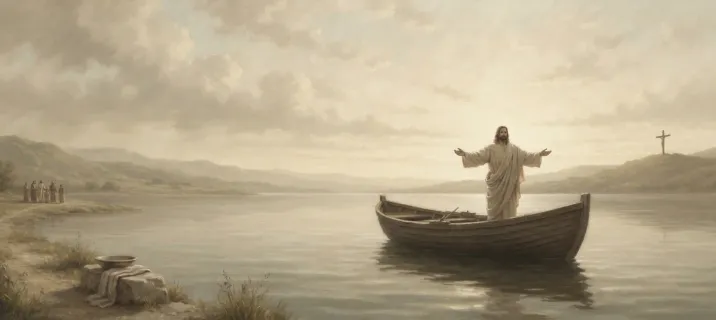
Jesus measured greatness by service, and said so plainly.
Following Him means taking up a cross, not avoiding one.
He is patient with disciples who are slow to understand.
His authority extends over sickness, nature, demons and death.
The cross is not the interruption of the story; it is the point of it.

Study guides
You've seen the big picture. Now explore the book verse by verse with our practical Bible Study Guide.
Related Resources