Summary
Jesus the promised King, and the kingdom He brings to His people.
by Dr. David Silver4 min read
Read the Summaryby Dr. David Silver4 min read
Matthew is one of the synoptic gospels (along with Mark and Luke) in the New Testament (NT). Mark traditionally was felt to be the first written, and Matthew (possibly written in 60’s A.D.) and Luke used his material (90% of Mark is contained in Matthew). Matthew was one of the twelve apostles and was a tax collector. The synoptic gospels have the same basic geographical outline: Jesus’ Galilee ministry; on the way to Jerusalem; in Jerusalem. Matthew was written mostly to a Jewish Christian audience, and his many OT quotes point to Jesus as the Davidic Messiah. Matthew shares fifteen OT prophecies fulfilled in Jesus’ ministry (over forty OT quotes). He records fifteen parables and twenty miracles. The literary structure of Matthew has six blocks of narrative material followed by five blocks of discourses.
After his opening genealogy, Matthew touches on the birth and early life of Jesus. Jesus is baptized by John the Baptist in chapter 3 and then is tempted in the wilderness by Satan in chapter 4. The Sermon on the Mount is covered in chapters 5-7. Jesus heals many in chapters 8-9 and sends out the twelve to do ministry in chapter 10. Chapter 13 contains about half of Matthew’s parables. Peter confesses Jesus is the Christ in 16: 16. Jesus is transfigured in chapter 17. Chapters 18-20 expound Jesus’ teaching. The triumphal entry into Jerusalem is in chapter 21. The Olivet discourse is in chapters 24-25. Chapter 26 highlights his last supper, arrest in Gethsemane and his trials. In chapter 27, Jesus is crucified and buried. The Resurrection occurs in chapter 28, and the book ends with his Great Commission.
The genealogy in Matthew 1 connects Jesus, through Joseph (his stepfather), back to Abraham. The number fourteen is emphasized because in Hebrew that number (by gematria) represented the name David. Jesus was the Davidic Messiah promised by God in 2 Samuel 7. Jesus was born of a virgin (Matthew 1: 22) by the Holy Spirit (1: 18, 20). He was born in Bethlehem (2: 1) and he and his family escaped to Egypt before Herod killed the baby boys in Bethlehem. The prophesy of Hosea was fulfilled.
When Jesus was baptized, the trinity was manifested. The Spirit led Jesus into the desert to be tempted by Satan after fasting for forty days. Jesus used the Scriptures to overcome the temptations. This second Adam was victorious where Adam had failed. Jesus called disciples to himself and began his ministry of healing and teaching. The Sermon on the Mount showed his authority and winsomeness (7: 28-29). The Beatitudes became a classic teaching (5: 3-12). The Lord’s prayer also became extremely popular. In chapters 8-9, Jesus heals many including the centurion’s servant, a paralytic, the bleeding woman, the blind and mute, and a dead girl (9: 23-25).
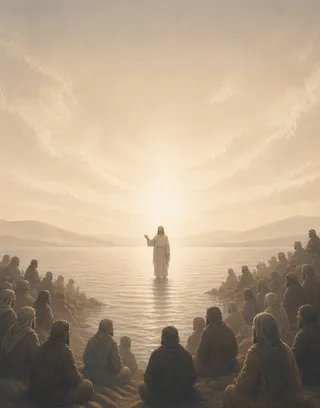
In chapter 13, the parable of the sower was foundational for understanding his parables. He explained it to his disciples and told them why he spoke in parables (13: 11-17). In chapter 14, Jesus fed the five thousand (this miracle was in all four gospels) and walked on water. When Peter confessed Jesus is the Christ in 16: 16, it is a turning point in the gospel. Jesus mentions his church (16: 18) as a result (this is the only gospel where the church is mentioned). From then on, Jesus began to predict his death and resurrection (16: 21).
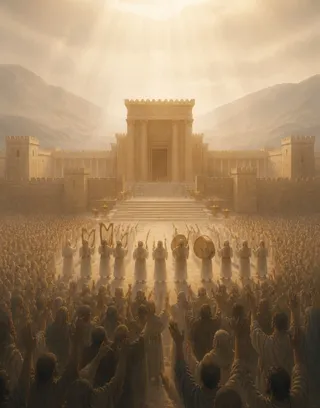
When Jesus arrives in Jerusalem during the triumphal entry, he is fulfilling Zechariah’s prophesy in Zechariah 9: 9. Then Jesus pronounces seven woes on the religious system including the Pharisees and teachers of the law in chapter 23. In the Olivet discourse in chapters 24-25 he discusses the fall of Jerusalem (which occurs in 70 A.D.), his return, and the judgment.
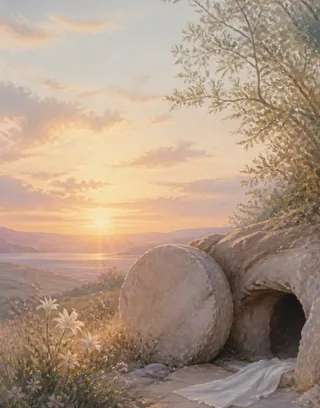
During his last supper with the disciples, Jesus predicted he would be betrayed and denied. He prayed and agonized in Gethsemane, knowing his time had come. He was arrested, crucified, and buried. The book ends with his resurrection in the last chapter and his Great Commission. Jesus commanded his apostles to make disciples of all nations, baptizing them, and teaching them to obey. He promised to be with his people always, to the end of the age.
Structure
Chapters 1–4
A genealogy running back to Abraham, a virgin birth in Bethlehem, the flight to Egypt, the baptism, and forty days of temptation answered from Scripture.
Chapters 5–7
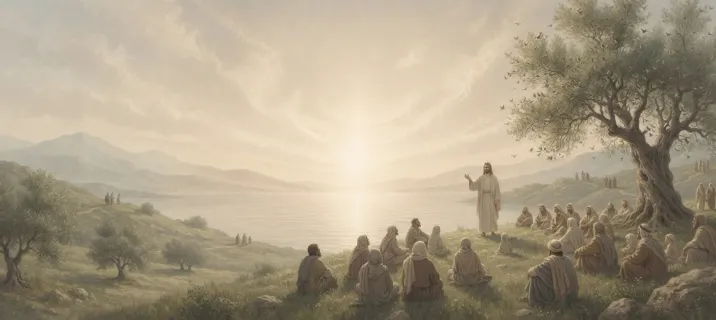
The Beatitudes, the Lord’s Prayer, and teaching that astonished the crowds because He taught as one with authority.
Chapters 8–16
Healings and miracles, the twelve sent out, the parables of the kingdom in chapter 13, and Peter’s confession that Jesus is the Christ.
Chapters 17–25
The transfiguration, teaching on the church and forgiveness, the triumphal entry, seven woes on the religious leaders, and the Olivet Discourse.
Chapters 26–28
The Last Supper, Gethsemane, the trials, the crucifixion, the empty tomb, and the Great Commission.
Key Themes
01
Again and again: this took place to fulfil what was spoken by the prophet.
02
Matthew’s phrase for what Jesus came announcing.
03
The genealogy, the title the crowds use, and the claim the book is making.
04
Five blocks of teaching on how those who follow this King live.
05
The only gospel that uses the word, and the only one that gives the Great Commission.
The Challenge We Face
Matthew’s whole purpose is to show that Jesus is the Messiah the Old Testament promised. He opens with a genealogy running to Abraham and David, and quotes the Old Testament more than forty times.
He is Immanuel, God with us, in the first chapter, and still with us to the end of the age in the last.
Apply Scripture
Jesus is the fulfilment of everything the Old Testament was reaching toward.
The Sermon on the Mount describes a life, not an ideal to admire.
The kingdom begins small and grows beyond what you can see.
Religious performance without mercy drew His sharpest words.
The Commission is for all nations, and He goes with those He sends.

Study guides
You've seen the big picture. Now explore the book verse by verse with our practical Bible Study Guide.
Related Resources