Summary
Rebuilding the walls, and the courage and prayer that finished the work.
by Dr. David Silver3 min read
Read the Summaryby Dr. David Silver3 min read
Nehemiah and Ezra were originally together in one book, but they were separated when the Vulgate was written by Jerome in 400 A.D. Nehemiah was among the third wave of exiles after the Babylonian exile ended to return to Jerusalem. The first wave was Zerubbabel and company in 538 B.C.; the second wave was Ezra and cohorts in 458 B.C. Nehemiah came back about thirteen years later in 445 B.C.
The opening verse states, “The words of Nehemiah,” and he speaks in the first person by verse 3. Therefore, Nehemiah seems to have contributed to this collection along with Ezra and potentially others. Nehemiah was a cup bearer to the Persian king Artaxerxes I. He learns from his brother Hanani that the wall of Jerusalem has been broken down. He mourned and prayed and when the time was right asked the king for help.
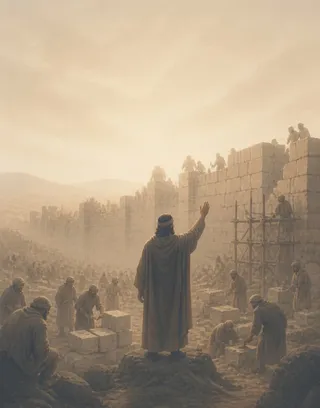
He planned the resources he would need and went to Jerusalem and inspected the wall. The leaders agreed to start rebuilding. Opposition arose from Sanballat the Horonite, Tobiah the Ammonite official, and Geshem the Arab. They mocked the Israelites from the start and intensified their opposition noted in chapters 4 and 6. Despite that, the wall was rebuilt in fifty-two days. Nehemiah showed strong leadership ability and had the people working in unity near where each lived. Nehemiah dealt with internal issues such as the poor being mistreated as discussed in chapter 5. A list of exiles who returned with Nehemiah is listed in chapter 7.
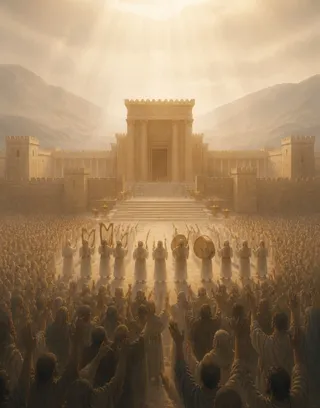
After this great task was accomplished in the first half of the book, Ezra read the Law of Moses at an assembly of all the people. Ezra, Nehemiah and the Levites instructed the people and encouraged them to be joyful (Nehemiah 8: 10). They celebrated the Feast of Booths for seven days and on the eighth day there was an assembly. After confessing their sins in chapter 9, they made a covenant renewal in chapter 10. The city of Jerusalem was repopulated by lot in chapter 11.
The names of priests and Levites in Jerusalem were reviewed in chapter 12 to ensure the temple of the Lord was maintained. Also, a dedication ceremony was held to celebrate the finished building of the wall. In the last chapter (13), people of foreign descent were excluded from Israel (Nehemiah 13: 3). During the time when Nehemiah returned to the palace, the temple was being neglected. When Nehemiah returned to Jerusalem, he dealt with this problem and threw Tobiah out of a room he had been provided in the temple. He also corrected misuses of the Sabbath where merchandise was being brought into Jerusalem on the Sabbath. Lastly, he dealt with those who married foreign wives.
This book is the last chronologically of the historic books. It was apparent that Israel had ongoing issues and despite attempts from Ezra and Nehemiah, the future king of David, the Messiah, would need to come and bring in a new life and eternal relationship with the Lord. That is what Jesus Christ did after the intertestamental period.
Structure
Chapters 1–2
A cupbearer in Susa hears that Jerusalem’s wall is broken down, mourns and prays for months, then asks the king for help and inspects the ruins by night.
Chapters 3–7
Families build opposite their own homes; Sanballat, Tobiah and Geshem mock, threaten and plot, and internal injustice is confronted — and the wall is finished in fifty-two days.
Chapters 8–10
Ezra reads the law to the whole assembly, the people weep and then rejoice, keep the Feast of Booths, confess, and sign a covenant.
Chapters 11–13
Jerusalem is repopulated and the wall dedicated; Nehemiah returns later to find the temple neglected and the Sabbath abused, and deals with both.
Key Themes
01
Nehemiah prays before he speaks, while he works, and when he is threatened.
02
Clear planning, visible presence, and people working where they have most at stake.
03
Mockery, threats, and invitations to a meeting are all answered the same way: the work goes on.
04
The reading of the law is the turning point of the book, not the wall.
05
The last chapter shows that reform has to be maintained, not just achieved.
The Challenge We Face
Nehemiah leaves a comfortable post in the king’s court for a ruined city, identifies himself with a people’s sin, and bears the cost of rebuilding them.
The book also ends unsatisfied: the wall stands and the same old sins return. The last of the historical books leaves Israel still needing a king from David’s line to make a people new from the inside, which is what Christ came to do.
Apply Scripture
Pray first and long, then plan carefully — they are not alternatives.
You do not have to answer every critic; some work is too important to come down for.
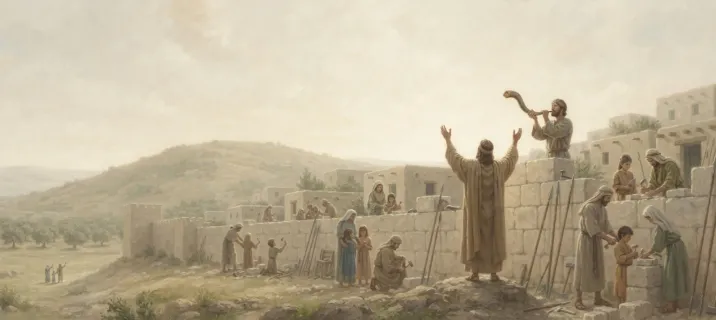
People work hardest on the section of wall in front of their own house.
Reading Scripture publicly and plainly changes a community.
Reform needs maintenance, or it quietly reverses.
Study guides
You've seen the big picture. Now explore the book verse by verse with our practical Bible Study Guide.
Related Resources